Map Man: Irish Maps & Mapping is a new book published by Barry Dalby, the owner/operator of EastWest Mapping.
The 184-page book is filled with numerous photos and as Barry states, it helps to “…address the various queries as to how we make maps, about features on our maps, placenames, requests for maps of new areas and so on.”
I recently ordered a copy and I totally loved it.
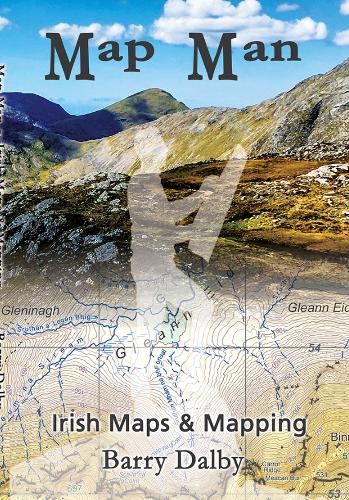
Map Man by Barry Dalby
The book begins with a brief autobiography and sets a context to why Barry got into mapping in the first place, he then addresses the processes of mapmaking, heritage features & information, and the history of small & medium scale mapping in Ireland. The final chapter deals with some of the issues and challenges that face anyone publishing maps in Ireland.
Much of the detail is fascinating, in particular for me the background to the maps that I draw so heavily on in my research, especially the historic maps. He also shines a light into the background of maps, and specifically the power and control exerted behind the scenes in relation to them. It’s hard to comprehend the barriers that he has faced as an independent map maker – trying to do his best on the unfair playing field created by the Irish State. It must be totally frustrating for Barry.
For me I think the highlight was his description of the process of research into placenames, and I have to say his approach and methodology is both impressive and worthy of celebration. Knowing only a tiny portion of what he describes, I can only take my hat off to him. One area I have sympathy with is the approach of the state and its agencies to names and perhaps a lackadaisical approach to ensuring placenames are maintained and clearly identified.
Several years back we appealed locally to Coillte to change a new sign on the Deerpark in Faithlegg. We went to the bother of writing and also, on at least two occasions when meeting Coillte officials, pointing out that the name Faithlegg, which they were employing, was a very lazy and historically inaccurate placename for the local woods. My brother Robert and I explained the location of the Minuan, Deerpark and the Glazing Woods and the origins and local relevance. The response was that it served the purpose of Coillte management very well – its purpose to identify to staff where specific plantations were based. Our point that it risked wiping away historic placenames was ignored. Imagine my annoyance to see new signage recently again – using the same lazy approach.

There is also a fine section in the book that explores placename origins and the struggle Barry takes in working out not just the background and possible meanings, but crucially, the specific location. He also celebrates the role of local, and not so local, experts who have helped considerably to enhance the placename work of the country – many without any support or acknowledgement of the State.
I would strongly recommend the book, and it’s also good to know that the €21 cost (P&P is separate but v reasonable) will go to support Barry and his ongoing work. It can be bought directly from the EastWest Mapping online shop.
0 Comments