
Thomas Francis Meagher was born in 1823 in the building that is now the Granville Hotel on Waterford’s busy quays. The family spent some years at Ballycanvan, hence the family tomb at Faithlegg. Thomas got an expensive education which culminated with Stoneyhurst College in England. In
Easter week 1843, when he was not yet twenty, he returned home, having been away for a year. In his Recollections of Waterford1 he includes a
very interesting account of this return including his journey up the harbour to his native city.
“A bright sun was lighting up the dingy walls of Duncannon Fort as
we paddled under them. There was Cheek point on the left, towering
grandly over the woods of Faithlegg. Further on, at the confluence of the
Barrow and the Suir, were the ruins of Dunbrody Abbey – an old servant,
with torn livery, at the gateway of the noble avenue. Further on, the
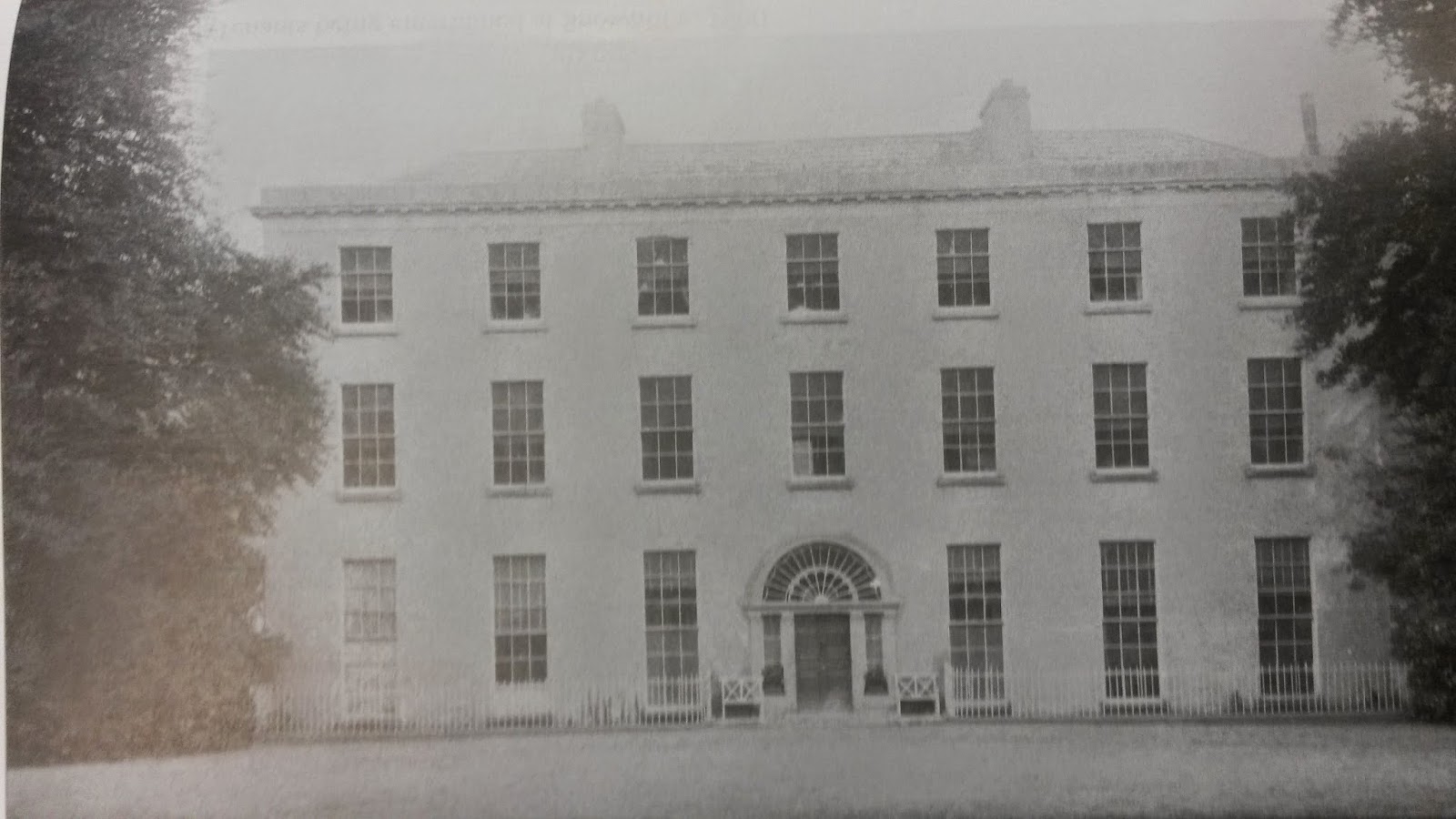
grounds and stately mansion of Snow Hill, the birth place of Richard
Sheil. Then the Little Island, with its fragments of Norman Castle and it’s
broad cornfields and kingly trees. Beyond this, Gauls Rock, closing in
upon and overlooking the old city. Last of all Reginalds Tower – a
massive hinge of stone connecting the two great outspread wings, the Quay and
the Mall, within which lay the body of the city – Broad Street, the cathedral,
the barracks, the great chapel, the jail, the Ballybricken hill, with its
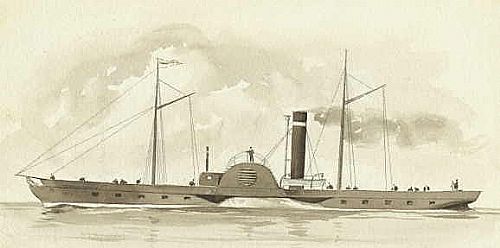
circular stone steps and bull post. The William Penn stopped
her paddles, let off her steam, hauled in close to the hulk, and made fast.
I was home once more….”
we paddled under them. There was Cheek point on the left, towering
grandly over the woods of Faithlegg. Further on, at the confluence of the
Barrow and the Suir, were the ruins of Dunbrody Abbey – an old servant,
with torn livery, at the gateway of the noble avenue. Further on, the
grounds and stately mansion of Snow Hill, the birth place of Richard
Sheil. Then the Little Island, with its fragments of Norman Castle and it’s
broad cornfields and kingly trees. Beyond this, Gauls Rock, closing in
upon and overlooking the old city. Last of all Reginalds Tower – a
massive hinge of stone connecting the two great outspread wings, the Quay and
the Mall, within which lay the body of the city – Broad Street, the cathedral,
the barracks, the great chapel, the jail, the Ballybricken hill, with its
circular stone steps and bull post. The William Penn stopped
her paddles, let off her steam, hauled in close to the hulk, and made fast.
I was home once more….”
|
| PS Toward Castle, an example of an earlier paddle steamer, I’m taken with the image however, of the person atop the paddle and imagine Meagher in just such a position on entering the harbour. 2 |
Apart from the wonderful writing, I found it interesting not just in what he sees around him, but also what he left out. I think most accounts
of the harbour now, would start with the Hook light, yet for Meagher its the “dingy walls of Duncannon Fort“, surely a hint of his
political and revolutionary outlook, and a conscious consideration to its strategic and sometimes dark history. Contrast it with his description of
the Cistercian abbey at Dunbrody “an old servant, with torn livery” in ruins possibly not long after the dissolution but yet a beacon still to the young Meagher. Maybe this was because it brought to mind a time when although ruled by foreigner, the country had been free to practice the catholic religion. Or perhaps the prosperity the Cistercians, Templers and Norman merchants brought to the harbour area.
of the harbour now, would start with the Hook light, yet for Meagher its the “dingy walls of Duncannon Fort“, surely a hint of his
political and revolutionary outlook, and a conscious consideration to its strategic and sometimes dark history. Contrast it with his description of
the Cistercian abbey at Dunbrody “an old servant, with torn livery” in ruins possibly not long after the dissolution but yet a beacon still to the young Meagher. Maybe this was because it brought to mind a time when although ruled by foreigner, the country had been free to practice the catholic religion. Or perhaps the prosperity the Cistercians, Templers and Norman merchants brought to the harbour area.

|
|
Dunbrody Abbey, Co Wexford from the river
|
I can’t see why Passage or Ballyhack don’t get a mention, given their commercial importance, although perhaps waning at the time due to steam power.
And it would be wonderful to hear of the sailing ships, steamers, work boats and fishing craft plying the river at the time. Its also interesting to
note what has come since, for example the Spider light at Passage, Great Island Power Station and the Barrow Bridge.
And it would be wonderful to hear of the sailing ships, steamers, work boats and fishing craft plying the river at the time. Its also interesting to
note what has come since, for example the Spider light at Passage, Great Island Power Station and the Barrow Bridge.
|
|
Snow Hill House, Co Kilkenny. 3
|
Perhaps the most amazing thing I found in Meaghers account was his confident style. not just the excerpt above, but also his account of walking
through his city streets and calling to the Waterford Club. His debates on the need for radical change and his vision of a different Ireland were, I think, astonishing for someone so young. Its hard to imagine that a few short months later he would make his first political speech in Lismore at a rally organised by Daniel O’Connell, to co-found the Young Irelanders, to participate in the failed rising of 1848, be transported to Tasmania, escape to America where he would eventually found the Irish Brigade to support the union cause in the American Civil War. Yet in his account all these things are suggested, or at least seems possible, such is his certainty in himself.
through his city streets and calling to the Waterford Club. His debates on the need for radical change and his vision of a different Ireland were, I think, astonishing for someone so young. Its hard to imagine that a few short months later he would make his first political speech in Lismore at a rally organised by Daniel O’Connell, to co-found the Young Irelanders, to participate in the failed rising of 1848, be transported to Tasmania, escape to America where he would eventually found the Irish Brigade to support the union cause in the American Civil War. Yet in his account all these things are suggested, or at least seems possible, such is his certainty in himself.

|
|
TF Meagher in later years
|
Meagher has his detractors and I have read some harsh criticisms of the man online. But Meagher was a man of principal, a man of action and a man
like all humans, of no small measure of complexity. Looking out upon the harbour as I write, I wish I could see a young idealist entering the harbour
with a vision of change for this blighted republic of 2016. Yet I have no doubt the same youthful visionaries are out there. Working here at
present against a different foe, a bureaucratic monster, all pervasive and cloying. Working via peaceful means to create a different republic.
Less for speeches than blogs perhaps. Less for insurrection than consciously and critically living their lives.
like all humans, of no small measure of complexity. Looking out upon the harbour as I write, I wish I could see a young idealist entering the harbour
with a vision of change for this blighted republic of 2016. Yet I have no doubt the same youthful visionaries are out there. Working here at
present against a different foe, a bureaucratic monster, all pervasive and cloying. Working via peaceful means to create a different republic.
Less for speeches than blogs perhaps. Less for insurrection than consciously and critically living their lives.
Just as much for direct action but by different means. Here’s an example of two young women doing just that, one of whom hails from the
Russianside!, which I came across recently: https://womenareboring.wordpress.com/
Russianside!, which I came across recently: https://womenareboring.wordpress.com/
1. I accessed the account of Meaghers in Fewer.T.N. (ed) I was a day
in Waterford. An anthology of writing about Waterford from the 18th to the 20th
Century. 2001. Ballylough Books. I fear the book is now out of
print, but is available in the Waterford room of the city’s Central Library.
Certainly would be good to see it reprinted.
in Waterford. An anthology of writing about Waterford from the 18th to the 20th
Century. 2001. Ballylough Books. I fear the book is now out of
print, but is available in the Waterford room of the city’s Central Library.
Certainly would be good to see it reprinted.
2. Sketch of PS Toward Castle accessed from here. Despite
numerous searches I could find no further information on the PS William Penn.
Tommy Deegan and Frank Murphy were both helpful in providing some leads.
Apart from Meaghers account, two other references to the ship exist.
Bill Irish recorded that the Waterford Steam Navigation Company were
using the ship from 1837 in Decies #53 and via Frank Murphy she is mentioned in
Bill’s book on Ship Building in Waterford as being owned or part owned by the Malcomson’s of Waterford.
numerous searches I could find no further information on the PS William Penn.
Tommy Deegan and Frank Murphy were both helpful in providing some leads.
Apart from Meaghers account, two other references to the ship exist.
Bill Irish recorded that the Waterford Steam Navigation Company were
using the ship from 1837 in Decies #53 and via Frank Murphy she is mentioned in
Bill’s book on Ship Building in Waterford as being owned or part owned by the Malcomson’s of Waterford.
3. photo of Snow Hill copied from Jim Walsh’s “Sliabh
Rua, A History of its People and Places” again out of print and available
in central library,
Rua, A History of its People and Places” again out of print and available
in central library,
0 Comments
Trackbacks/Pingbacks